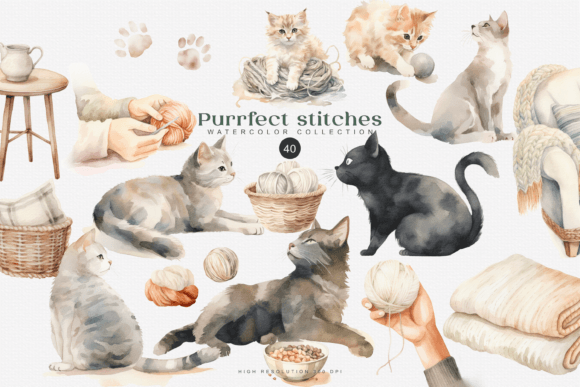
Knitting Crochet Watercolor Clipart Illustrations
Evaluating the Niche Appeal for Digital Product Shops
As a digital product creator preparing a new seasonal collection for my Etsy shop, I approach every new graphic design asset with a critical eye. When evaluating this Knitting Crochet Watercolor Clipart set, my first impression centers on its specific emotional resonance. This is not a generic craft bundle; it possesses a distinctively cozy, handmade aesthetic that immediately signals "slow living" and "fiber arts." For sellers targeting the knitting community, yarn shop owners, or lifestyle bloggers, these illustrations offer an authentic visual language that stock photography often fails to capture.
The mood is undeniably warm and nostalgic, yet the watercolor rendering keeps it feeling fresh rather than dated. From a business perspective, this niche appeal is valuable because it targets a passionate, high-intent audience. Buyers searching for fiber art assets are rarely browsing casually; they are usually looking for specific branding elements for yarn labels, pattern covers, or workshop materials. The soft edges and organic textures of this clipart suggest a premium, artisanal quality that justifies a higher price point for finished goods compared to flat vector alternatives. However, as with any digital download, the artistic vibe must translate into functional utility before I commit to building a product line around it.
Commercial Viability Across Print-on-Demand and Digital Formats
In my shop workflow, versatility determines whether an asset earns its keep. I tested this Knitting Crochet Watercolor Clipart across three distinct revenue streams to gauge its commercial viability. First, for printable design products like wall art and greeting cards, the watercolor texture holds up beautifully at standard print resolutions. The subtle color variations add depth to nursery prints and "Yarn Lover" gift tags without requiring additional editing. Second, for sublimation design applications on mugs and tumblers, the artwork integrates seamlessly with white ceramic surfaces. The transparency of the PNG files allows for easy layering over background patterns, which is essential for creating complex tumbler wraps quickly.
Third, I evaluated its potential for Canva template creation. Social media templates for yarn dyers and crochet designers require assets that frame text without overwhelming it. These illustrations work exceptionally well as corner accents or header backgrounds for Instagram posts and Pinterest pins. However, for t-shirt design and apparel, I found the asset works best when paired with bold typography. Standalone watercolor elements can sometimes look faint on fabric, so using them as part of a larger composite design ensures visibility. For Cricut project users, the complexity of the watercolor edges means this is better suited for "Print Then Cut" features rather than standalone vinyl cutting, where intricate details might be lost during weeding.
Optimizing Listing Images and Perceived Value
A beautiful asset is useless if it doesn't convert browsers into buyers. In the creative marketplace ecosystem, your thumbnail is your storefront window. I used this Knitting Crochet Watercolor Clipart to create mockups that emphasize tactile warmth. Because the subject matter is inherently textured, pairing the digital clipart with physical-looking mockups—such as a printed card resting on a knitted blanket or a mug beside a ball of yarn—bridges the gap between digital file and physical reality. This visual storytelling significantly boosts perceived value.
For product mockup previews, consistency is key. I recommend creating a cohesive brand identity for your listing images by using the same color palette from the clipart in your text overlays and borders. This signals to the customer that the design bundle is curated and professional. When selling to other small business owners, such as those running a handmade business, showing the clipart applied to real-world items like packaging stickers or thank-you cards demonstrates practical ROI. Customers need to visualize exactly how they will use the asset. A listing that shows the clipart isolated on white, applied to a dark background, and featured in a lifestyle scene covers all bases and reduces pre-sale questions.
Strategic Placement: Where the Asset Shines
Based on my testing, this clipart performs best in medium-to-large scale applications. It is ideal for:
- Digital paper packs: The watercolor washes create excellent seamless patterns when tiled correctly.
- Planner stickers: Specifically for habit trackers related to crafting or self-care routines.
- Blog graphics: Headers for DIY tutorials or fiber art reviews benefit from the wide aspect ratio of many included elements.
- Packaging design: Belly bands for yarn skeins or labels for handmade soap fit the rustic aesthetic perfectly.
- Social media graphics: Story backgrounds where the soft texture prevents text fatigue.
These applications leverage the organic nature of the illustration style, allowing the imperfections of watercolor to enhance rather than detract from the final product.
Risk Mitigation: Where to Exercise Caution
Every commercial design asset has limitations, and ignoring them leads to refunds and negative reviews. With this Knitting Crochet Watercolor Clipart, avoid using it for tiny, detailed sticker designs intended for die-cutting. The soft, bleeding edges characteristic of watercolor do not translate well to precise cut lines on machines like Silhouette or Cricut unless you manually create offset buffers. Additionally, be cautious when placing these elements on dark backgrounds without adjustment. Watercolor is traditionally transparent; without a solid white underbase or specific blending mode adjustments, the colors may appear muddy or invisible on black merchandise.
I also advise against using these highly textured assets in thumbnails that are already cluttered. If your main listing photo contains multiple product examples, busy watercolor backgrounds can reduce readability on mobile devices. Finally, verify contrast ratios if you plan to sell accessible social media graphics templates. Ensure that any text placed over the clipart remains legible, as the varying opacity of watercolor can sometimes interfere with font clarity.
Seller Checklist for Professional Implementation
Before publishing any product featuring this asset, run through this practical quality assurance checklist to ensure a professional customer experience:
- Verify File Integrity: Open every PNG design and SVG design file to confirm transparency is clean and resolution meets 300 DPI standards for print.
- Test Print Colors: Screen colors often differ from CMYK output. Print a test sheet to ensure the yarn and needle tones remain vibrant and accurate.
- Font Pairing Strategy: Test the clipart with various typefaces. Serif fonts enhance the vintage/traditional feel, while clean sans-serif fonts modernize the look for younger demographics. Handwritten scripts should be used sparingly to avoid competing with the organic brush strokes.
- Licensing Compliance: Double-check the commercial license terms. Confirm whether you can sell end products, if attribution is required, and if there are limits on print runs for print-on-demand items.
- File Organization: Group files logically within your zip folder. Separate clipart from backgrounds and provide a PDF guide with usage tips and color hex codes to add extra value.
- Mockup Diversity: Create at least one mockup showing the asset on a white background and one on a colored/textured background to demonstrate versatility to potential buyers.
By treating this Knitting Crochet Watercolor Clipart as a strategic business tool rather than just a decorative element, you can build a sustainable product line that serves the fiber arts community effectively. The key lies in understanding both the aesthetic strengths and technical constraints of the asset, ensuring that every Etsy product or design assets bundle you release meets the high standards your customers expect.