Peacock Clipart & Watercolor Illustrations Review
Evaluating Visual Mood for Boutique Branding Projects
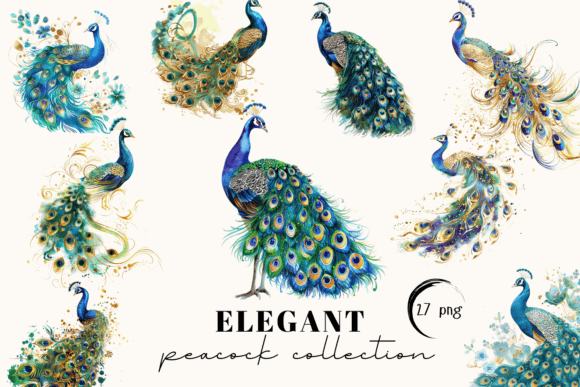
When assessing a new graphic design asset for a client project, my first criterion is always emotional resonance. In reviewing this specific collection of Peacock Clipart, Watercolor Clipart, the immediate impression is one of organic luxury and artisanal warmth. Unlike rigid vector graphics or sterile stock photography, these watercolor illustrations carry a distinct hand-painted texture that signals authenticity. For a current client project involving a handmade jewelry line launching a seasonal collection, this aesthetic is precisely what bridges the gap between premium pricing and accessible craftsmanship.
The color palette within these illustrations leans into rich teals, iridescent greens, and soft gold washes. This creates a mood that is regal yet approachable, avoiding the stiff formality often associated with peacock imagery. As a designer, I look for assets that do not just fill space but actively contribute to the narrative. This clipart set succeeds because the watercolor bleeding and brush textures feel intentional rather than accidental. It suggests a modern design sensibility that respects traditional art forms, making it highly suitable for clients in the beauty, wellness, stationery, and bespoke gift sectors.
Performance Across Packaging and Print-on-Demand Products
In real-world application, versatility is non-negotiable. I tested this design bundle across multiple deliverables for the jewelry brand, specifically focusing on packaging design and merchandise. The high-resolution nature of the PNG design files proved essential when scaling elements for jewelry box inserts and thank-you cards. The watercolor edges retained their softness even at smaller sizes, which is a common failure point for lower-quality raster art.
For print-on-demand sellers and Cricut users, the integrity of the transparent background is vital. I inspected the alpha channels and found them clean, with no jagged halos or gray artifacts around the delicate feather details. This makes the asset exceptionally strong for sticker design and t-shirt design. When applied to a dark fabric mockup, the vibrancy held up well, though designers should note that watercolor translucency requires careful blending modes in software like Photoshop or Illustrator to avoid muddiness. As a sublimation design, the color saturation appears adequate for polyester transfers, provided the file resolution remains above 300 DPI at print size.
Strategic Placement in Digital Marketing and Editorial Layouts
Beyond physical products, this Peacock Clipart, Watercolor Clipart serves as a powerful anchor for social media graphics and web design. In designing Instagram carousel templates and Pinterest pins for the client, I utilized the larger peacock compositions as hero elements. The intricate detailing draws the eye immediately, establishing a clear focal point without requiring heavy typography. This supports effective visual hierarchy, allowing marketing messages to remain legible against the softer, textured background areas of the illustration.
For editorial design and blog visuals, these assets work beautifully as section dividers or pull-quote accents. They add visual rhythm to text-heavy content, breaking up monotony while reinforcing brand identity. However, when integrating this into a Canva template for client handoff, I recommend locking the layer or providing usage guidelines. Because watercolor is inherently expressive, stretching or distorting the image destroys its value. These marketing visuals perform best when treated with respect for their original aspect ratio and artistic intent.
Optimal Environments for Watercolor Avian Art
Through testing, it became clear where this asset shines brightest. It is ideal for large layout areas where the brushwork can be appreciated, such as poster backgrounds, wedding invitation suites, and website headers. It excels in product mockup staging, adding context and lifestyle appeal to flat product shots. For Etsy product listings featuring digital downloads or printable wall art, this style communicates "handmade" value instantly. Themed collections, particularly those revolving around nature, bohemian aesthetics, or luxury self-care, will find this clipart integrates seamlessly.
Navigating Limitations and Visual Hierarchy Risks
Professional judgment also requires recognizing where an asset fails. This Peacock Clipart, Watercolor Clipart should be used cautiously in minimalist corporate branding or tech-focused interfaces. The organic complexity can clash with clean grid systems and reduce perceived professionalism in strictly formal contexts. Avoid using these detailed illustrations at very small sizes, such as favicons or tiny footer logos; the watercolor texture will simply read as noise or dirt.
Furthermore, be mindful of contrast issues. Placing dark teal feathers over a black background without a glow or border effect can cause the subject to disappear. Similarly, placing text directly over the busiest parts of the peacock plumage harms readability. Always prioritize negative space. If the layout is already crowded with photography and copy, adding this ornate element may overwhelm the viewer. In such cases, opt for simpler supporting brand elements instead.
Technical Due Diligence for Commercial Design Work
Before committing this digital product to a paid client project, rigorous technical vetting is mandatory. My checklist for this asset included several critical steps that every designer and small business branding expert should replicate:
- Grayscale Testing: Convert the artwork to black and white to ensure tonal contrast exists independent of color. If the peacock becomes a flat blob in grayscale, it lacks structural definition.
- Typography Pairing: Test against various typefaces. Elegant serifs and flowing scripts complement the watercolor style, while bold geometric sans-serifs can create a striking modern juxtaposition. Avoid decorative display fonts that compete with the illustration’s intricacy.
- Format Verification: Confirm whether the SVG design files are true vectors or merely embedded rasters. True vectors allow infinite scaling for billboards or vehicle wraps, whereas raster-based SVGs have size limits.
- Print Proofing: Never trust screen colors blindly. Run a test print on the actual paper stock intended for the final deliverable. Watercolor often prints darker and less saturated than backlit screens suggest.
- Licensing Audit: Scrutinize the commercial license terms. Verify if there are caps on unit sales for printable design products or restrictions on using the asset in logos. Protecting your client from legal exposure is part of professional service.
Final Verdict on Creative Marketplace Value
After comprehensive evaluation, this Peacock Clipart, Watercolor Clipart stands out as a robust creative design resource for specific niches. It is not a universal solution for every brand, but for businesses seeking to evoke elegance, nature, and artistry, it delivers significant value. The balance between detail and usability makes it a strong contender for brand identity projects that require a human touch.
For designers browsing a creative marketplace, this asset represents a time-saving alternative to custom painting while retaining enough unique character to avoid looking generic. Whether you are building a logo design concept, crafting digital ads, or developing a cohesive stationery suite, the key lies in respectful integration. Treat the watercolor texture as a feature, not just filler. By understanding both its atmospheric strengths and its technical boundaries, you can leverage this design asset to elevate client work from functional to truly memorable.