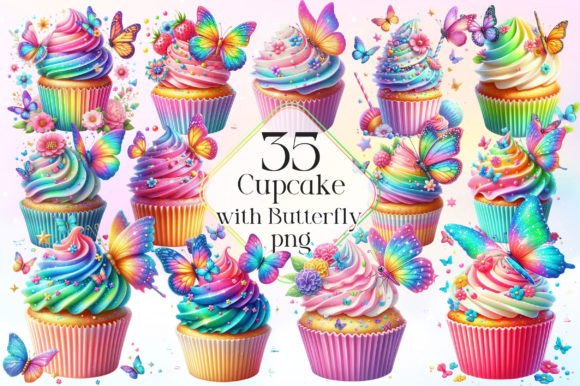
Watercolor Butterfly Cupcake Clipart Review
As an embroidery designer who has digitized and stitched out countless files for client projects, I approach every new graphic with a specific question: will this actually translate to thread? When evaluating Watercolor Butterfly Cupcake Clipart, my first impression is one of delicate whimsy. The intersection of soft watercolor washes and structured cupcake geometry creates a mood that is simultaneously nostalgic and fresh. However, as anyone in the craft business knows, what looks beautiful on a screen does not always behave well under the needle. This review breaks down how this illustration performs when moved from digital assets to a tangible finished product.
Translating Soft Washes to Stitch Density
The primary challenge with any watercolor-style machine embroidery design is capturing the gradient without creating a bulletproof patch of thread. In this specific artwork, the butterfly wings and the frosting swirls rely on color blending. For a successful embroidery project, you must verify if the digitizer used variable density fill stitch techniques or layered shading. If the stitch density is too uniform, the watercolor effect will look flat and plastic rather than painted.
I recently tested a similar aesthetic for a custom sweatshirt embroidery order. The goal was to maintain the airy feel of the original art while ensuring coverage on fleece. We found that utilizing a lighter density fill with a textured thread path worked best. When reviewing this clipart for your own use, zoom in on the transition areas between colors. You want to see intentional gaps or blending stitches, not solid blocks. This attention to detail is what separates a professional handmade product from a hobbyist attempt, directly influencing customer trust and perceived value.
Fabric Selection and Stabilizer Strategy
The versatility of Watercolor Butterfly Cupcake Clipart depends heavily on your substrate choice. Because watercolor aesthetics are inherently light and translucent, they perform exceptionally well on white or cream fabrics where the fabric itself can act as a highlight. However, if you are planning a tote bag design on natural canvas, be aware that the warm undertones of the fabric may alter the cool pastels often found in butterfly illustrations.
- Stretchy Fabrics: For baby embroidery on onesies or knit tops, use a cut-away stabilizer to prevent the design from distorting during washing. The intricate details of butterfly antennae can easily get lost if the fabric shifts.
- Textured Surfaces: On terry cloth towels or fleece blankets, consider using a water-soluble topping. This keeps the running stitch outlines and small satin details from sinking into the pile, preserving the clarity of the cupcake liner and wing veins.
- Dark Fabrics: Proceed with caution. Watercolor designs rarely include a white underlay base because it ruins the transparency effect. If stitching on navy or black, you may need to edit the embroidery file to add a white foundation, accepting that the final look will be more opaque than the original digital preview.
Real-World Application: The Custom Apron Test
To truly evaluate the commercial viability of this asset, I applied it to a real-life scenario: creating a personalized gift for a bakery owner launching a boutique cookie line. The client wanted something sweet but sophisticated, avoiding generic chef hats or rolling pins. Watercolor Butterfly Cupcake Clipart seemed like the perfect bridge between culinary and nature themes.
We chose a mid-weight denim apron as the base. The denim provided enough stability for the detailed satin stitch borders while offering a neutral backdrop that let the pastel hues pop. During the test stitch-out, we discovered that the butterfly’s lower wings were slightly too narrow for standard 40-weight thread. Switching to a finer 60-weight thread for those specific sections prevented thread buildup and maintained the delicate proportion. This level of refinement is crucial for Etsy seller success; customers buying custom apparel expect crisp details, not thread nests.
The result was a high-end small shop product that photographed beautifully for social media. The watercolor texture gave the apron an artistic, hand-painted quality that justified a higher price point than standard embroidered merchandise. It proved that this illustration works best when treated as a premium accent rather than a utilitarian logo.
Navigating Size Constraints and Detail Loss
While the artwork is charming at full size, resizing requires careful judgment. Watercolor effects rely on space between stitches to simulate transparency. If you shrink this design down for a cap or a small pocket logo, those spaces close up, turning a dreamy butterfly into a dense, stiff blob. Always check the minimum recommended hoop size before purchasing or digitizing.
For smaller applications like embroidered patch production or sleeve cuffs, you might need to simplify the design. Removing internal shading lines and relying solely on outline and broad fills can preserve readability at 2 inches or less. Conversely, enlarging the design for a pillow cover or wall hanging exposes every digitizing flaw. Ensure the digital embroidery file includes adequate underlay to prevent fabric puckering across larger span areas. A distorted cupcake base on a large throw pillow looks unprofessional and can damage your brand reputation.
Commercial Viability and Licensing Checks
For creative entrepreneurs and Etsy sellers, understanding the usage rights of Watercolor Butterfly Cupcake Clipart is as important as the stitch quality. Before listing any personalized gift or commercial embroidery item, confirm whether your license covers physical end products versus digital redistribution. Many illustration licenses allow you to sell finished embroidered goods but prohibit selling the digitized file itself or using the raw image in printable mockup templates for other designers.
Additionally, consider the saturation of this niche. Butterfly and cupcake motifs are evergreen, which means competition is high. To make your design assets stand out, pair this clipart with unique typography or combine it with complementary elements like floral wreaths or gingham backgrounds. This customization transforms a stock illustration into a proprietary brand asset. When photographing your finished items for listings, ensure the lighting accurately represents the thread colors. Watercolor embroidery can appear washed out in poor lighting, so natural light or diffused studio setups are essential for showcasing the subtle color gradients that make this design special.
Final Designer Notes for Success
Before committing to a bulk run of holiday embroidery or boutique inventory, always conduct a thorough test stitch. Do not rely solely on software simulations. Physical testing reveals tension issues, stabilizer compatibility, and true color interactions that screens cannot show. Check your thread colors against the original art in both daylight and indoor lighting, as metallic or variegated threads can drastically change the watercolor perception.
Ultimately, Watercolor Butterfly Cupcake Clipart offers a lovely opportunity for makers to create soft, feminine, and artistic goods. Its success lies in respecting the medium's limitations. By managing density, choosing appropriate fabrics, and validating licensing, you can transform this digital illustration into a profitable and beautiful addition to your embroidery repertoire. Whether you are crafting a baby embroidery keepsake or stocking your shop with seasonal decor, treating this design with technical precision ensures the final stitch-out honors the artistry of the original concept.